
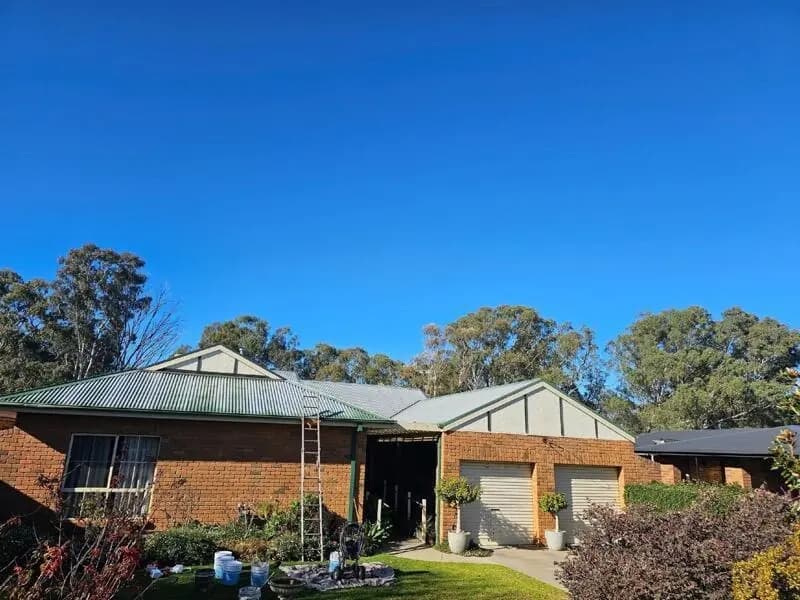
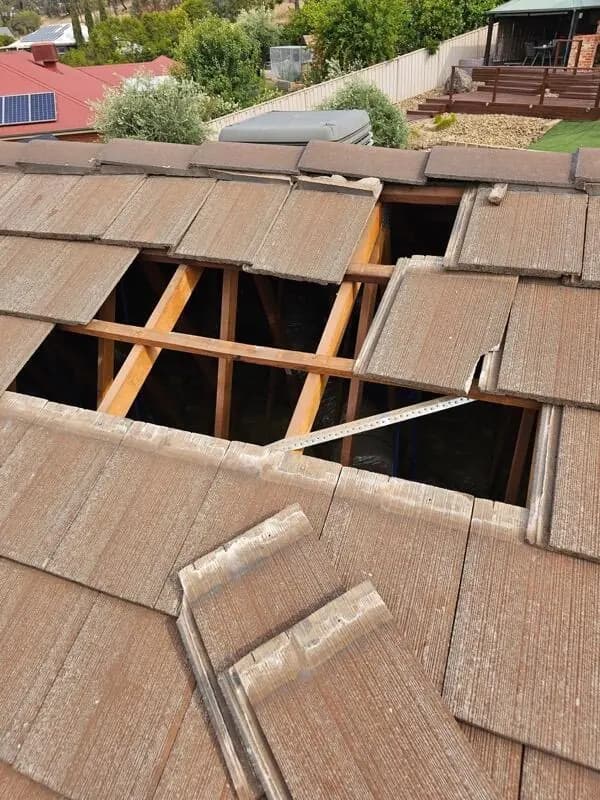



If your roof was cleaned and the green is already back, nothing went wrong on the day. The wrong thing was done.
Why does moss grow back so quickly after a roof clean?
Because lichen and moss aren't dirt sitting on top of the tile. They root into the surface of it. A pressure wash removes what you can see and leaves the root system behind, so within a season it's back. Treating it first, then washing, is what actually clears it.
That's the honest answer, and it's the reason a cheap roof clean is cheap.
What's actually growing on the roof
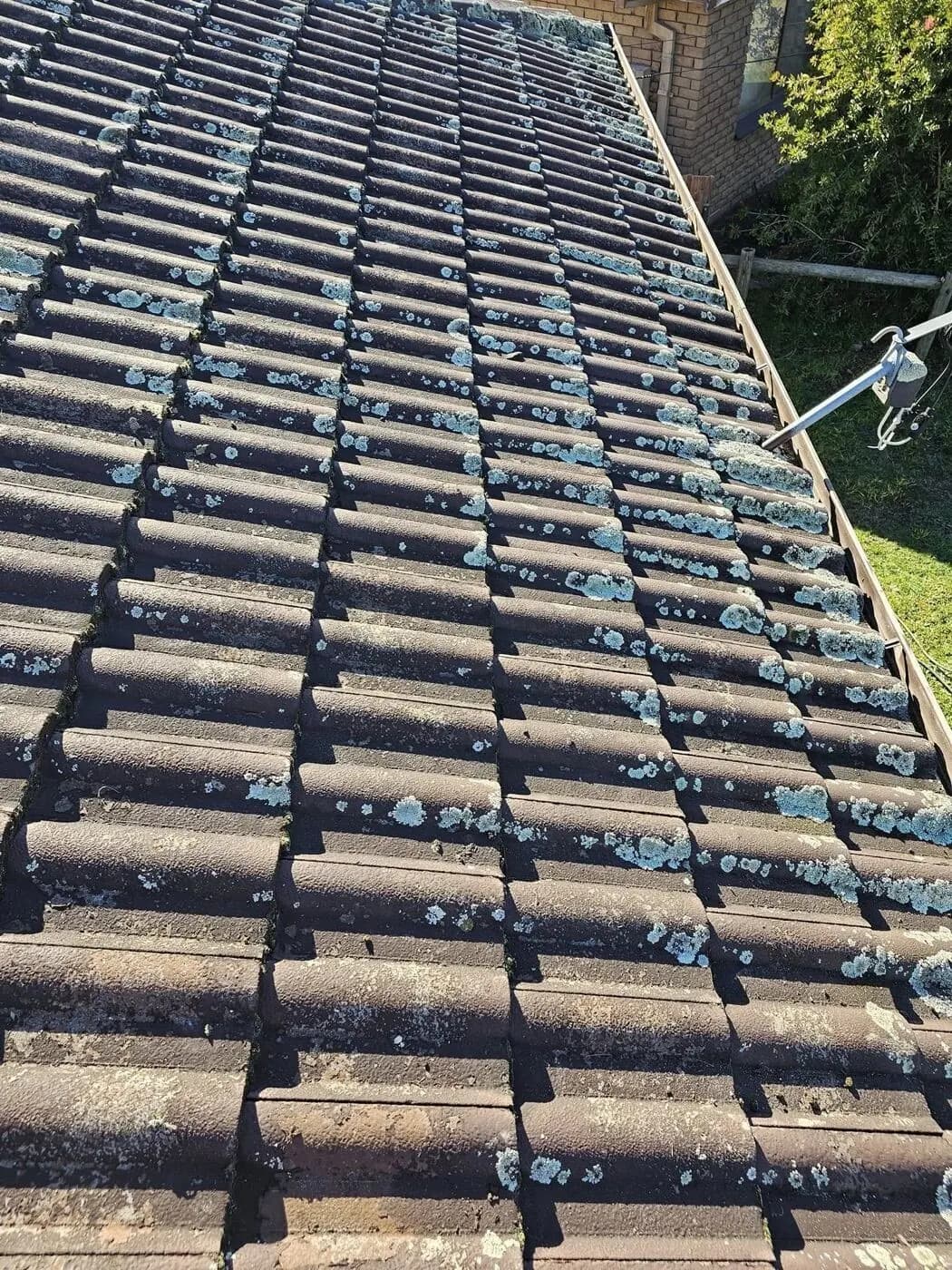
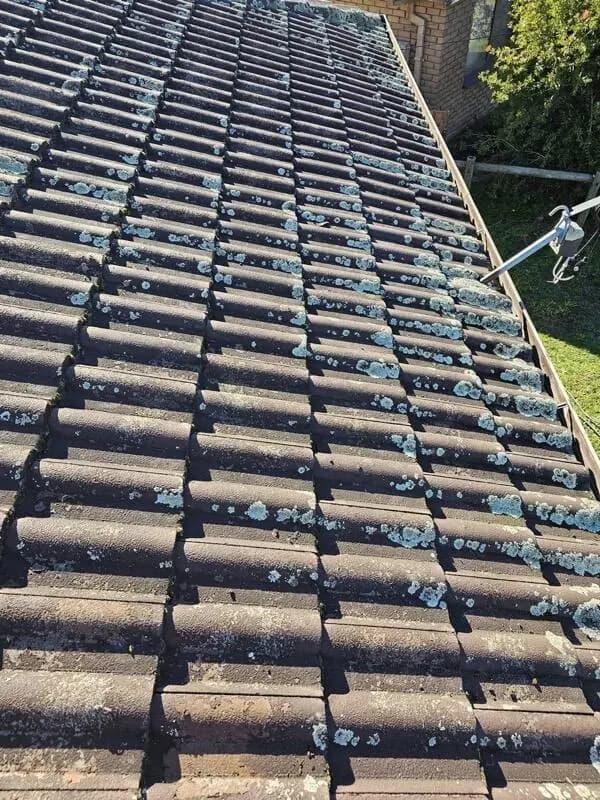
Two different things, usually together. Moss is the soft green stuff that builds up in the laps and low points where water sits. Lichen is the flatter, crustier growth, often grey green, and it's the one that gets into the tile.
Lichen is what causes the real trouble. It holds moisture against the surface, and on a concrete tile that's already gone porous with age, that moisture is doing damage well before anyone notices a stain on a ceiling.
Why high pressure on its own doesn't work
Pressure takes off the growth you can see. It doesn't kill what's rooted into the surface, and on an older concrete tile enough pressure to try will start taking the tile with it.
There's a second problem. Driving water sideways under tiles, which is what happens when someone works against the fall of the roof, pushes it where it isn't meant to go. I've been called out to leaks that started with a cheap clean.
If someone quotes a roof clean and the whole job is a wand and a ladder, ask what treatment they're using and how long they leave it on. If there isn't one, you're paying for a season.
What a proper clean involves
The treatment goes on first and gets left to do its work. That's the step that kills the root system rather than just removing the top. Then the wash, working with the fall of the roof so water goes where it should.
- Moss and lichen treatment applied, and left on
- High pressure wash working down the fall, not across it
- Valleys and gutters cleared of everything that comes down
- Downpipes checked, because that's where it all ends up
- Surrounds rinsed off and the site left tidy
The debris part matters more than it sounds. A roof clean puts a surprising amount of material into your gutters, and leaving it there turns a clean roof into a blocked downpipe.
Why one side of the roof is always worse
The south facing pitch stays damp longer because it gets the least sun, so that's where moss and lichen take hold first. On a lot of houses around here that side is well gone while the north face still looks fine.
It doesn't usually mean you only treat one side. What grows on the shaded pitch will spread. But it does explain why a roof can look perfectly good from the street and be a mess from the back fence.
Is a clean all my roof needs?
Sometimes, yes. If the tiles themselves are sound and the ridge pointing is intact, a treatment and a wash is the whole job and there's no reason to spend more. I'd rather tell you that than talk you into a restoration.
Where a clean isn't enough is when the tiles have gone porous through, or the bedding under the ridge capping has failed. Cleaning a roof in that state makes it look better for a while and fixes nothing.
The honest answer depends on what your tiles are actually like, and that's not something I can tell you from a description.
Still not sure?
Every roof is different and there is a limit to what any article can tell you about yours. If something here sounds like what you are looking at, get in touch and I will come and have a proper look.
- Rebedding or repointing, and why it decides the priceTwo quotes can say the same thing and be thousands apart. Nearly always it's this.
- How often should you have your roof looked at?Roofs don't fail loudly. By the time there's a stain on a ceiling, the thing that caused it has usually been going for years.