
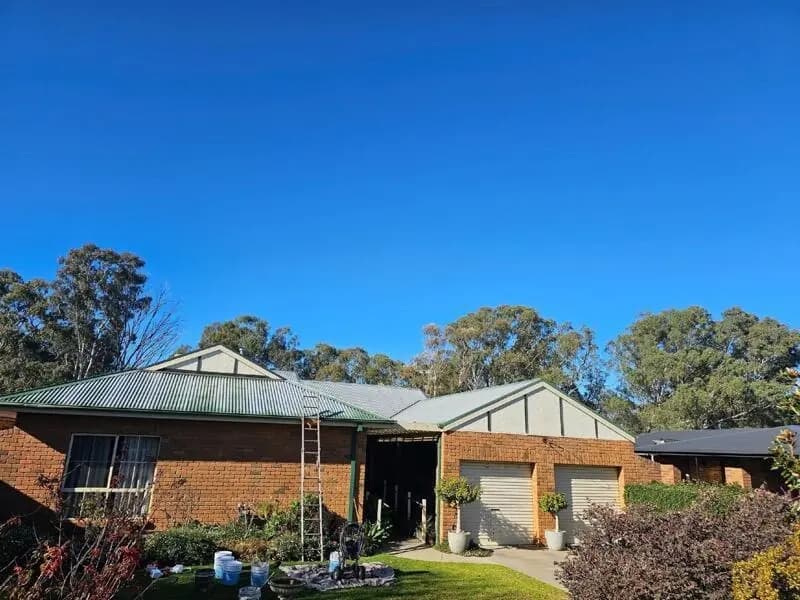




A roof gives you years of warning before it leaks. Almost none of it is loud, and most of it is visible from your own lawn.
How often should a roof be inspected?
Every couple of years is plenty for most houses, and after any storm that brought hail or branches down. Older tile roofs, anything over about thirty, are worth looking at more often, because that's the age at which ridge bedding and pointing reach the end of their life.
You don't need someone up there annually. You do need to stop assuming that no leak means no problem.
Why roofs fail quietly
Almost nothing that goes wrong on a roof announces itself. Pointing cracks and nothing happens for two years. A tile slips and the one underneath catches the water for a while. A valley fills with leaves and only overflows in heavy rain.
By the time water reaches a ceiling it has usually been getting in for a long time, and it rarely comes through directly below where it entered. It runs along a batten, down a rafter, and drops somewhere else entirely.
That's the whole argument for looking before there's a reason to.
What can I check myself, from the ground?
A surprising amount, with nothing more than a walk around the house and a look up. Stay off the roof and off ladders. Most of what matters is visible from the lawn.
- Mortar crumbs in the gutter or on the ground below the ridge line
- Hairline cracks along the ridge, or capping sitting unevenly
- Tiles that are slipped, cracked or clearly a different colour
- Moss or lichen build up, particularly on the shaded side
- Gutters sagging, overflowing in rain, or with plants growing in them
- Rust starting at the screws and flashings on a metal roof
If you photograph anything that looks off, that's more useful than a description. Send them through and most of the time I can tell you whether it's worth a look.
What about after a storm?
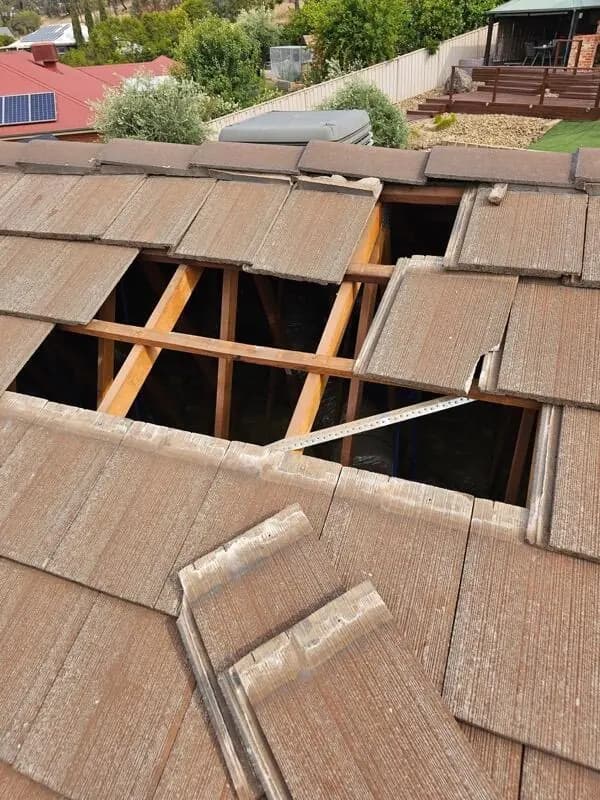
Always worth a look, even if nothing is obviously wrong inside. December 2025 put a lot of roofs around here in a bad way and plenty of the damage wasn't visible from the ground.
If you can see damage, photograph everything before anything gets cleaned up. That's the evidence and it only exists once. There's more on that in the storm and insurance pages.
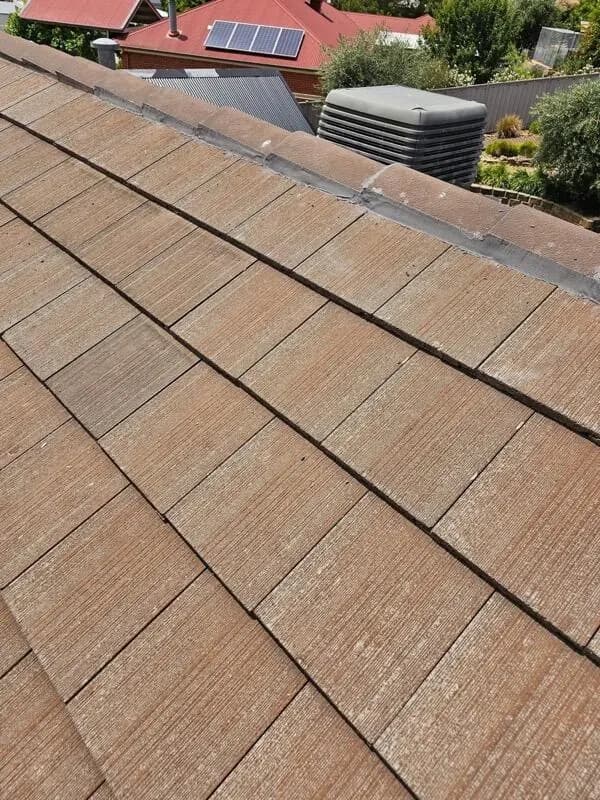
What I actually check when I'm up there
Not a look from the driveway. Bedding and pointing along every ridge and hip, the valleys, the flashings, the state of the tiles themselves, and the gutters and downpipes while I'm there.
Anything I find gets photographed, so you can see it rather than take my word for it. If nothing needs doing I'll say so, and that happens more often than people expect.
Rentals, unit blocks and anything with a property manager
This works differently, and better. Rather than waiting for a tenant to ring about a ceiling, the roofs get looked at on a rotation and small things get dealt with while they're still small.
I look after a real estate company's rental properties, every roof and gutter across the portfolio, and a retirement village of 152 self contained units on the same basis. A property manager isn't impressed by a good quote. They keep using you or they don't, and they find out which within a season.
If you manage property rather than live in it, the conversation is about a cycle rather than a job.
Still not sure?
Every roof is different and there is a limit to what any article can tell you about yours. If something here sounds like what you are looking at, get in touch and I will come and have a proper look.
- Why the moss comes back after a pressure washBecause lichen isn't dirt. It has a root system, and the water pressure only takes the top off it.
- Can a cracked roof tile be repaired, or does it need replacing?One tile is rarely just one tile, and the answer has more to do with what's underneath it than the tile itself.