
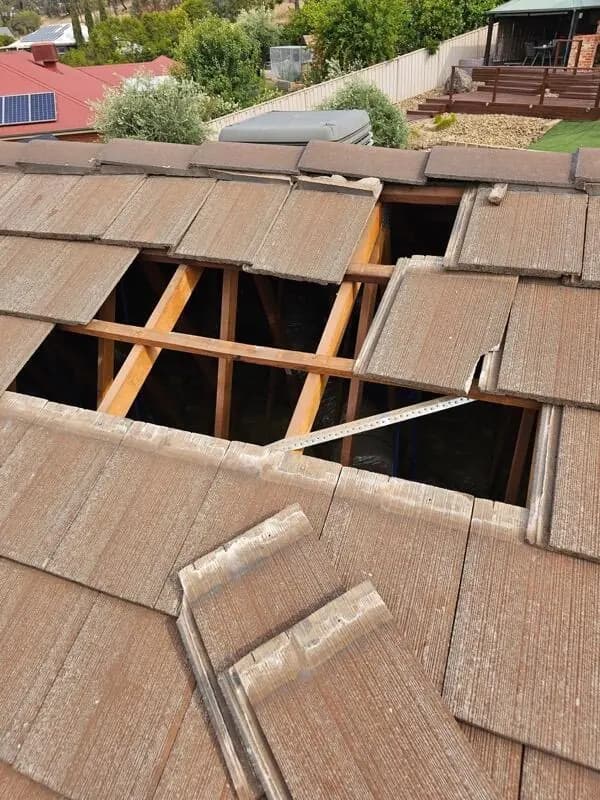


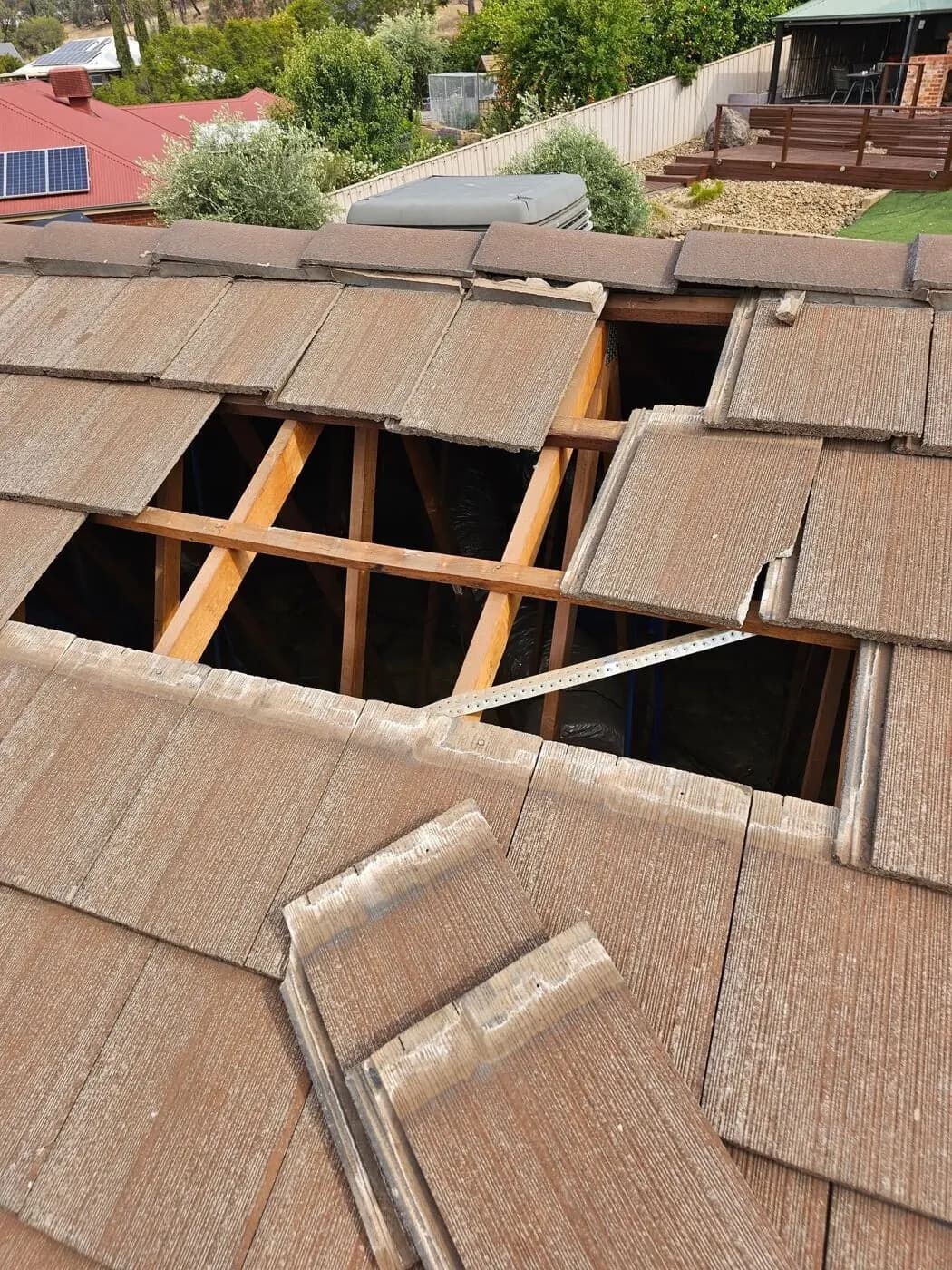

One cracked tile is a small job today. What makes it expensive is what has been going on underneath it in the meantime.
Should a cracked roof tile be repaired or replaced?
Replaced. Sealing or patching a cracked tile is a temporary fix that traps water against the crack and usually makes it worse. Tiles are made to be lifted out and swapped individually, so replacing one is a small job as long as the profile can be matched.
The part worth paying attention to isn't the tile. It's whether water has already been getting past it.
Why tiles crack in the first place
Mostly foot traffic. Somebody has been up there at some point, for an aerial or a solar install or a previous repair, and stepped where they shouldn't have. That's why cracked tiles usually come in a group rather than one on its own.
The rest is weather. Hail, a branch, or a tile that was already porous with age finally giving up. On a roof over thirty years old the tiles have absorbed a lot of water over a lot of summers.
If you've had solar put on, or an aerial, or any work up there, it's worth a look afterwards. Not because installers are careless, but because tile roofs are unforgiving of a foot in the wrong place.
Does one cracked tile actually matter?
Yes, though not immediately. A tile roof sheds water in layers, so the tile below a cracked one will catch what gets through for a while. What you're relying on in the meantime is the sarking, if there is any, and the battens staying dry.
Houses from before sarking became standard don't have that second line at all. On those, a cracked tile is the only thing between the weather and your ceiling.
Can you match my tiles if they're old?
Usually. Tiles are matched by profile first, which is the shape, and then as close as possible on colour. Terracotta and concrete both, including older profiles that aren't made any more.
Colour is the honest limitation. A tile that's been on a roof for thirty years has weathered, and a replacement won't have. It'll be close rather than invisible, and it'll blend over time. Anyone promising an exact match on an old roof is overselling it.

What gets found once the tile is off
This is the real reason to deal with it rather than leave it. With the tile out I can see the battens and the sarking underneath, and that's where the damage from a long standing crack actually shows.
- Battens gone soft where water has been sitting on them
- Sarking torn or missing, so there's no second line at all
- More cracked tiles nearby, from the same footstep
- Ridge capping that's moved where tiles have shifted
None of that is visible from the ground and none of it is in the original quote, because nobody can see it until the tile comes off. What I do is tell you before I do anything about it, rather than putting it on the invoice afterwards.
Is terracotta different to concrete?
Different enough to matter. Terracotta is fired clay, it doesn't go porous the way concrete does, and a terracotta roof in good condition doesn't need coating at all. Plenty of them get coated anyway, which is money spent on a roof that didn't need it.
Concrete tiles do go porous with age, and that's when a restoration starts making sense rather than repairs. Which one you've got changes the answer completely.
Still not sure?
Every roof is different and there is a limit to what any article can tell you about yours. If something here sounds like what you are looking at, get in touch and I will come and have a proper look.
- Rebedding or repointing, and why it decides the priceTwo quotes can say the same thing and be thousands apart. Nearly always it's this.
- How often should you have your roof looked at?Roofs don't fail loudly. By the time there's a stain on a ceiling, the thing that caused it has usually been going for years.